
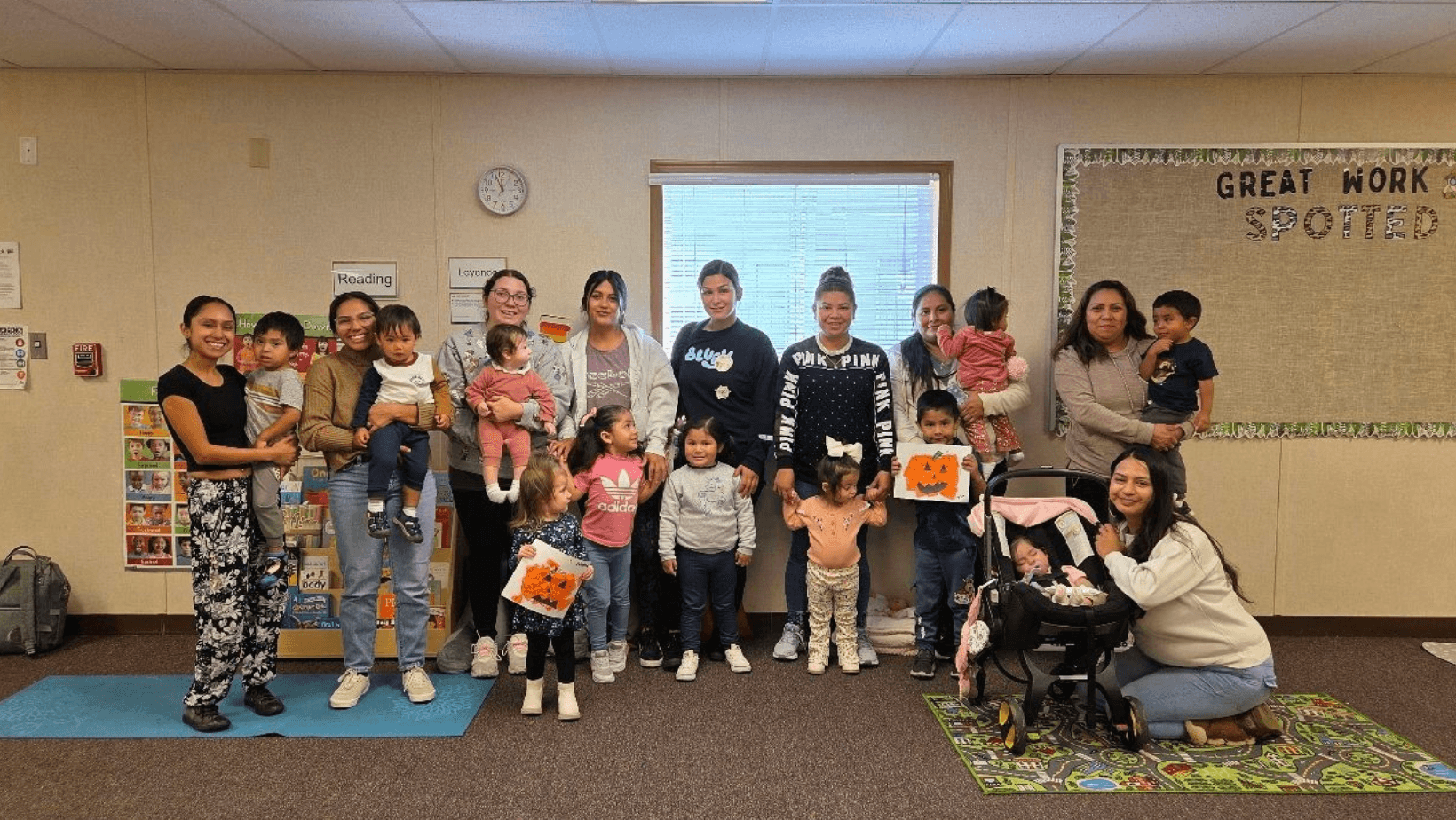
When I first arrived to shadow United Way’s playgroup, I expected something similar to a daycare. It became quickly clear that my assumption was wrong. United Way’s playgroup is not simply a place to drop kids off; it was designed carefully with the intent of focusing on childhood development and parent connections. From the moment families walked in, the space felt energetic, welcoming, and alive with color.
The playgroup serves children as young as a couple of months old to age five, and everything in the classroom indicates a wide range of opportunities for a child's development. Toys of every kind fill the space! From blocks, books, art supplies, costumes and toy cash registers, that can easily entertain a kid’s imagination for hours on end! Watching these kids' imaginations unfold so naturally highlighted the importance of play time during early childhood. I was even invited by the kids to join in myself, playing grocery store as the children checked me out, shaping playdough into sculptures, and building alongside them. I even found these activities quite engaging, and found myself just as immersed as the kids were.
Although play time was a big portion of the experience, the environment was far from chaotic. A trained employee led the group with purpose, guiding children and parents through activities and transitions seamlessly throughout their session. Planned activities such as group dances, songs, storytime, counting exercises, and circle time were met with smiles and excitement from everyone. These activities showed how playgroup classes are not only fun, but also educational, while supporting social, emotional, and cognitive development.
The social benefits extended beyond just the children though. United Way’s playgroup also was created for an outlet for parents to connect with one another. As children play, parents are encouraged to talk with one another, share experiences, and offer resources as a way to build relationships. United Way also offered a “Parent’s Corner,” where families could access information about community resources and support services. I even witnessed parents engaging in conversations, sharing similar stories about their children’s development and the challenges they have faced along the way. This part of the program emphasized that the playgroup is just as much about supporting parents as it is about supporting children. Reminding everyone that the struggles of parentings are often shared experiences, and that talking about them can make a difference.
I also noticed how excited the children were when they arrived. Many children and parents greeted one another by name, clearly familiar with one another from previous sessions, which showed the strong sense of connection the program fosters. At the end of the playgroup, that excitement shifted into reluctance to leave, with several children expressing sadness and begging for more time. Their reactions highlighted another important aspect of the program: consistency. Because the playgroup is offered multiple times a week at various locations, families are able to build routines and long-lasting relationships over time, making the program an essential part of their lives